
Indigo Napkin Workshop
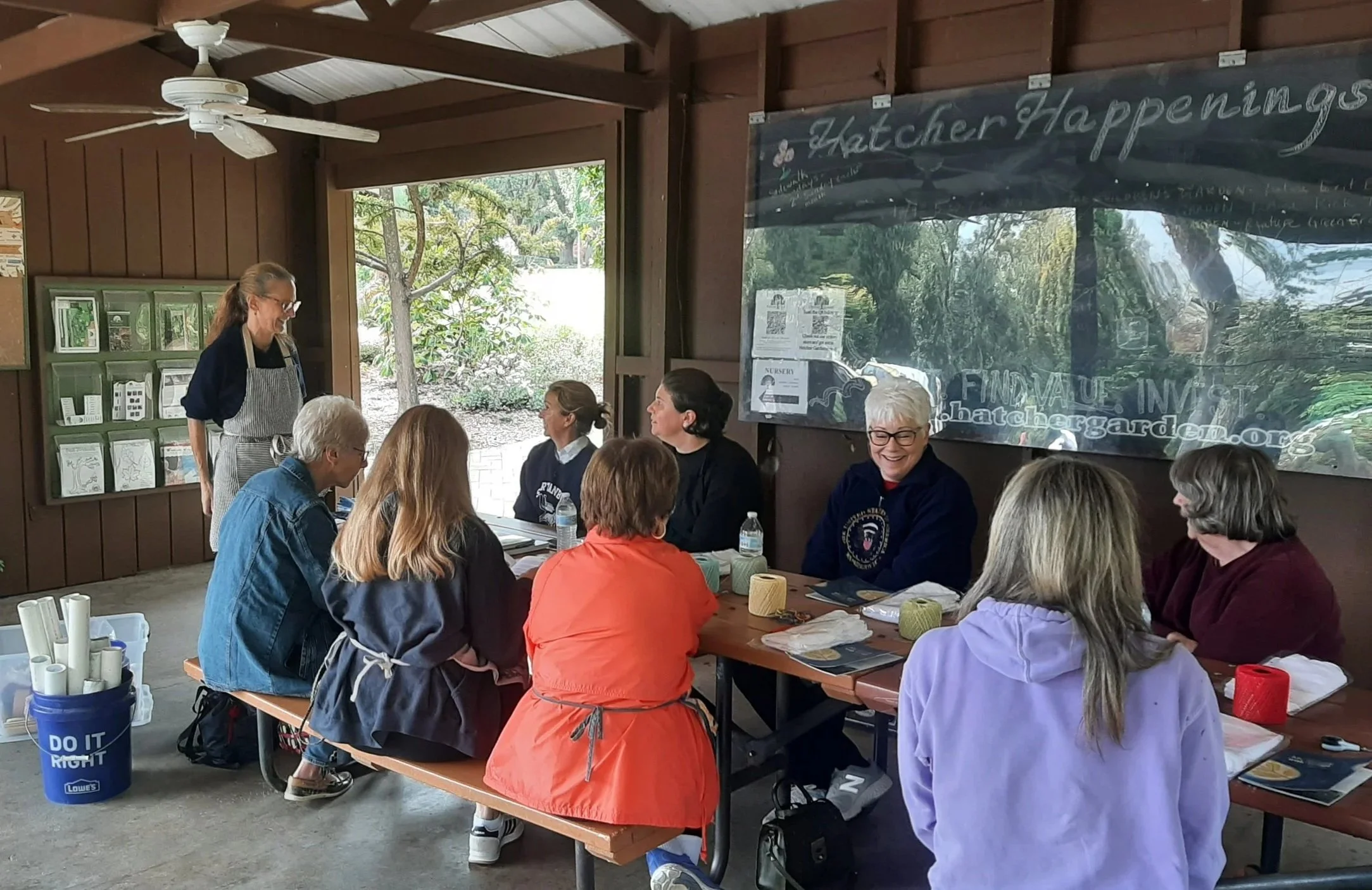
On a cool autumnal Saturday morning, twelve people were dy(e)ing to learn how to use the plant indigo to dye napkins. Raffaella Riva of Chi Indigo Design instructed the workshop participants in a three hour course. She related South Carolina's rich history in indigo as well as information on how the plant is grown and harvested. Indigo is planted in May and harvested in September. Indigo plants are used for three years then a new crop is replanted. Enslaved peoples taught local farmers how to extract the dye from the plants through a fermentation process.
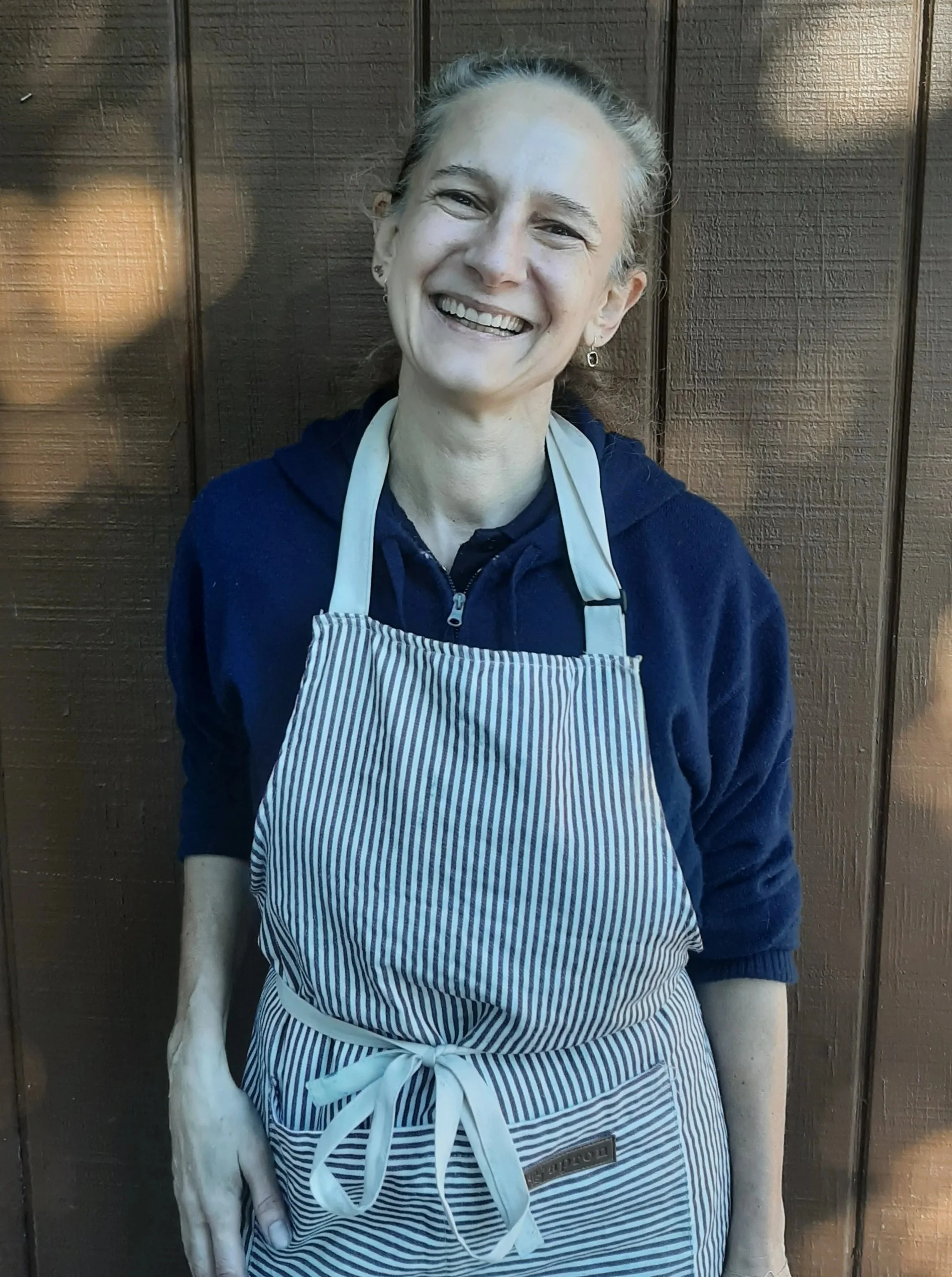
Our instructor Raffaella Riva from Chi Indigo Designs.
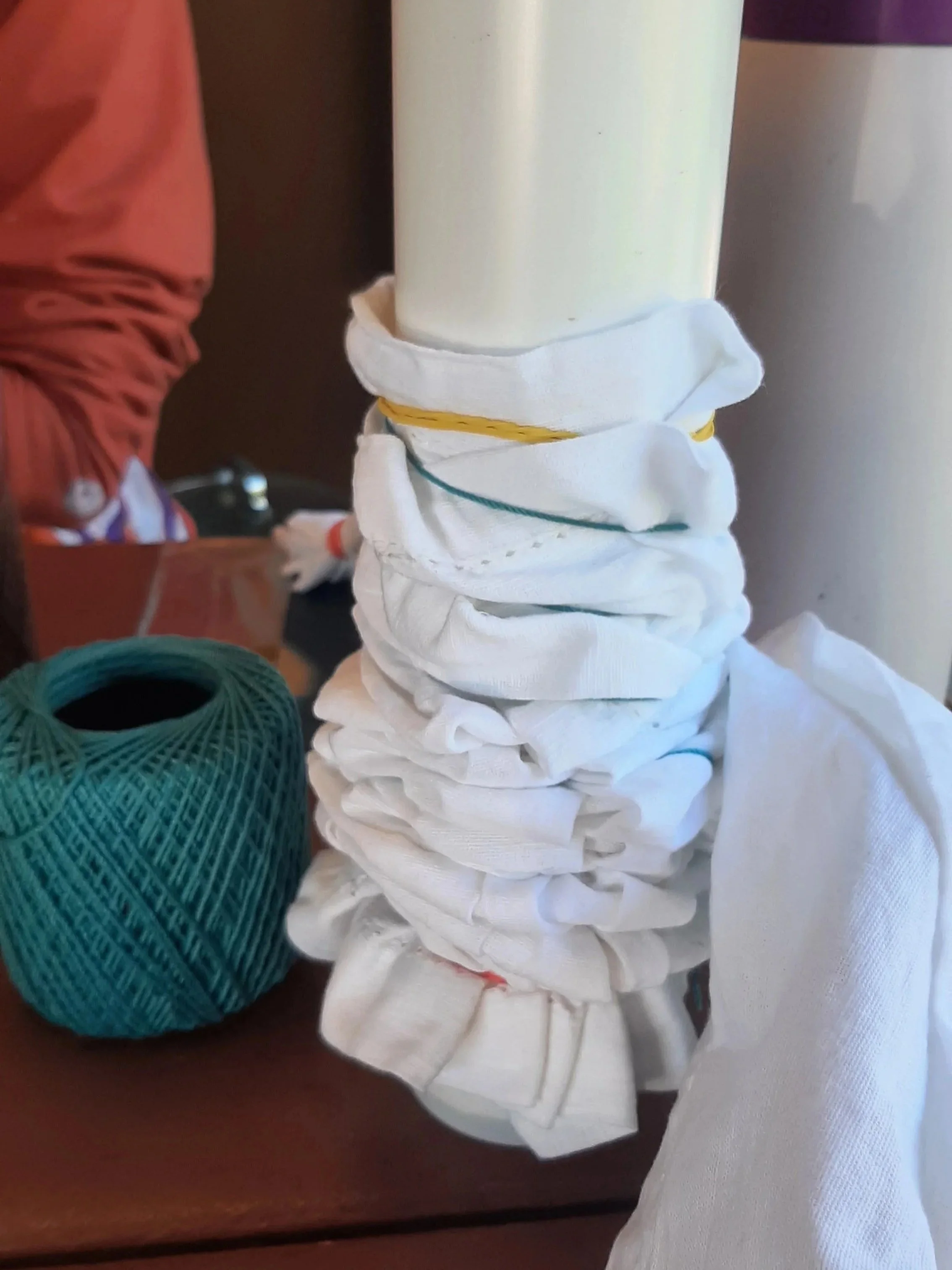
Wrapping, scrunching and tying to create a resist.
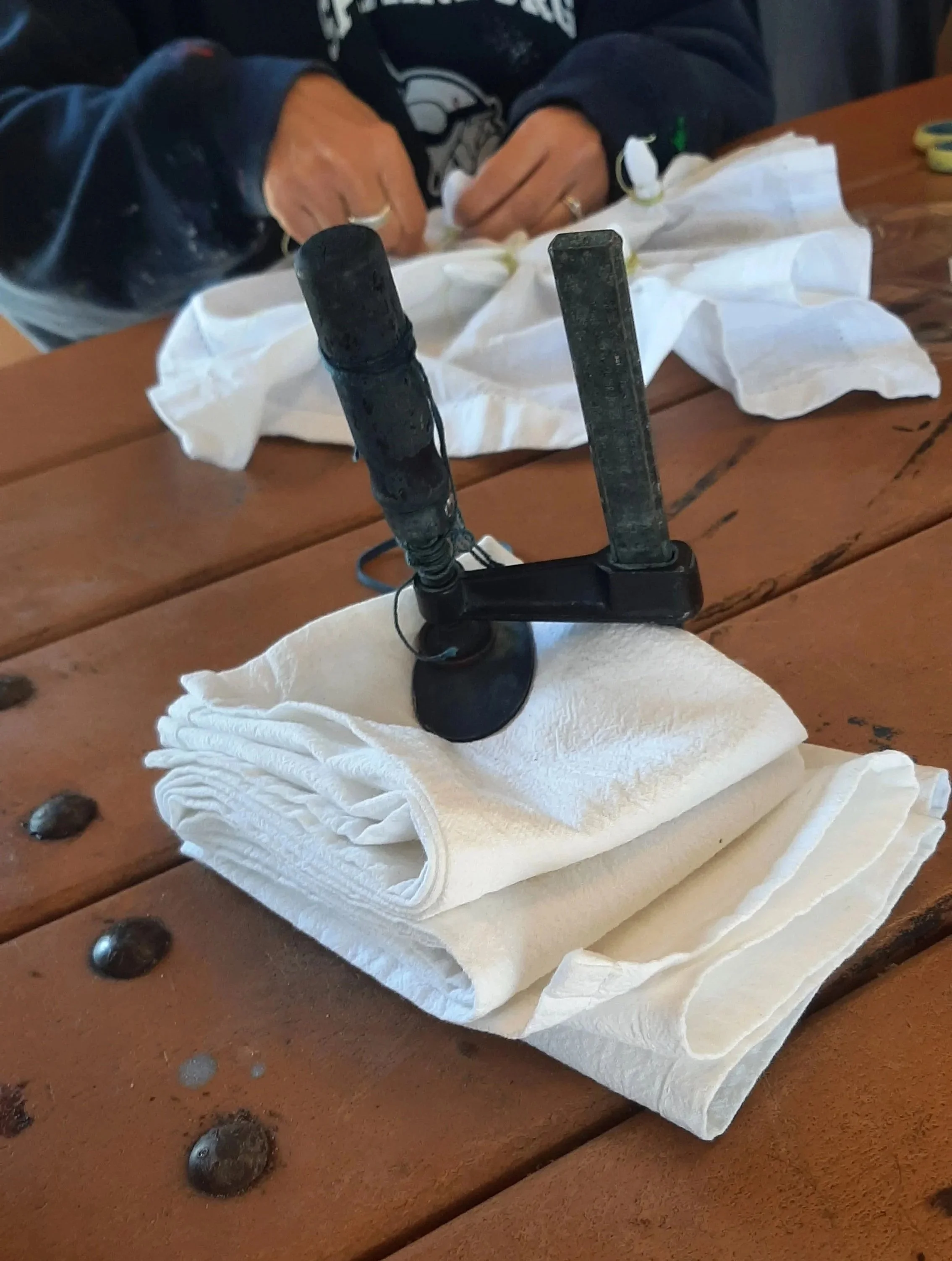
Clamping an object in the napkin to create a resist.
Next Raffaella described and demonstrated the four techniques the participants were going to use when they were going to dye their napkins. In order to prevent the white of the napkin from being dyed, the napkins are tightly wrapped, folded, tied, twisted and clamped with objects to create a resist. This method of creating patterns is called Shibori, derived from the Japanese verb shiboru ("to wring, squeeze, or press").
After the participants had prepared their four napkins the four different ways, the preparation of the indigo and actual dying process began. Their efforts were rewarded with beautiful pieces they took home.
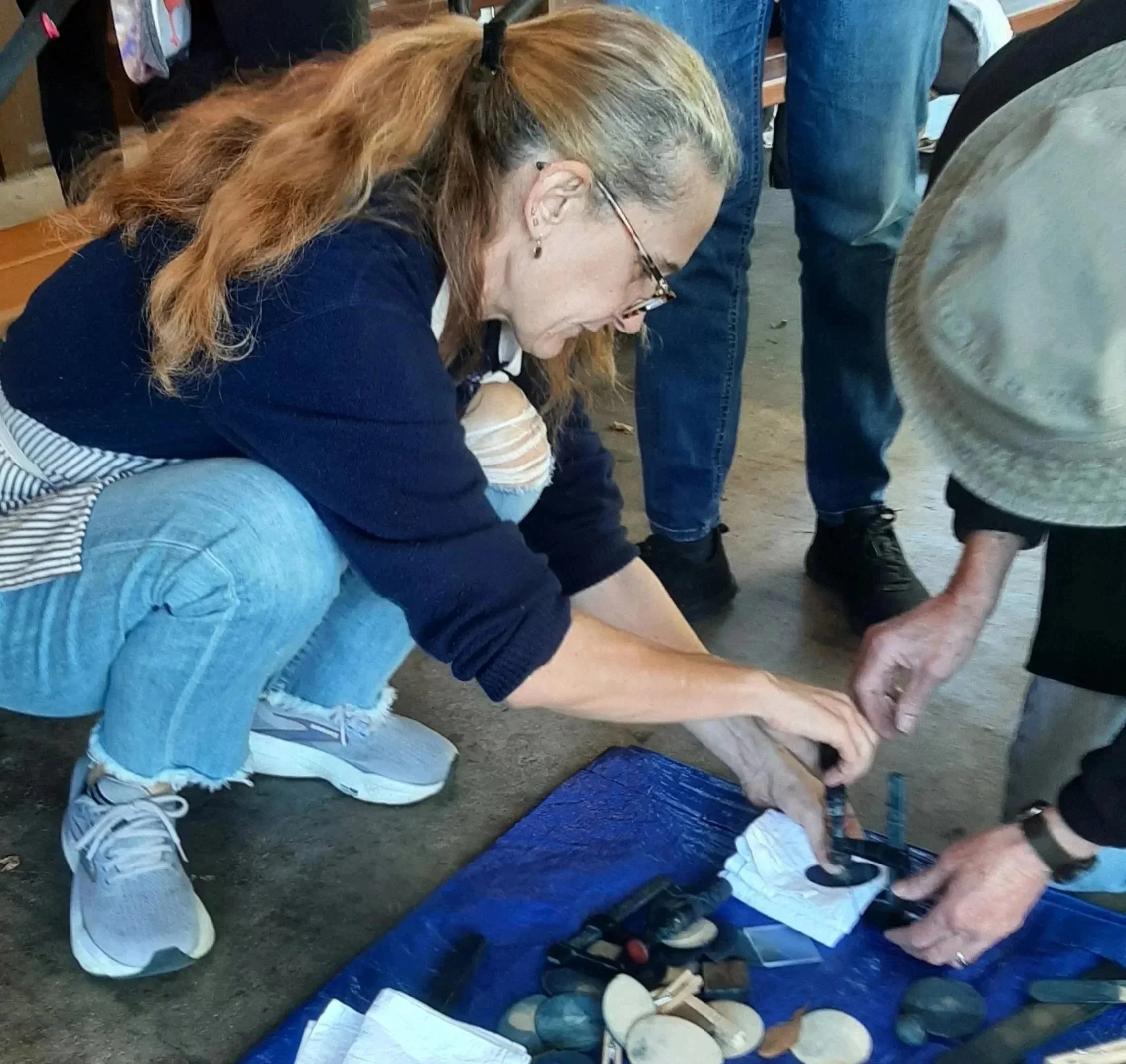
Raffaella demonstrating the resist method by clamping and object with the folded napkin.
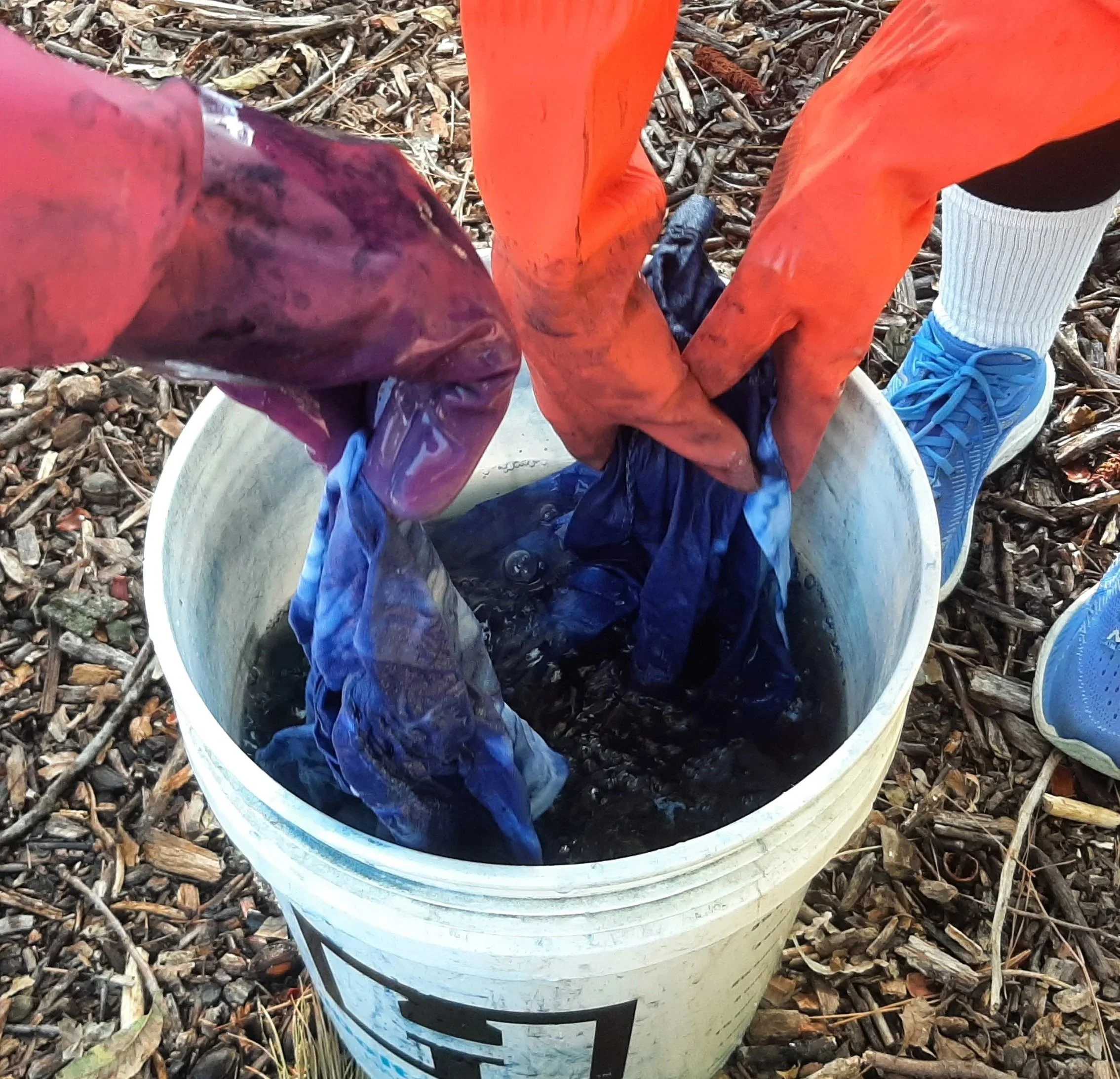
Dyeing the prepared napkins in the vats of indigo.
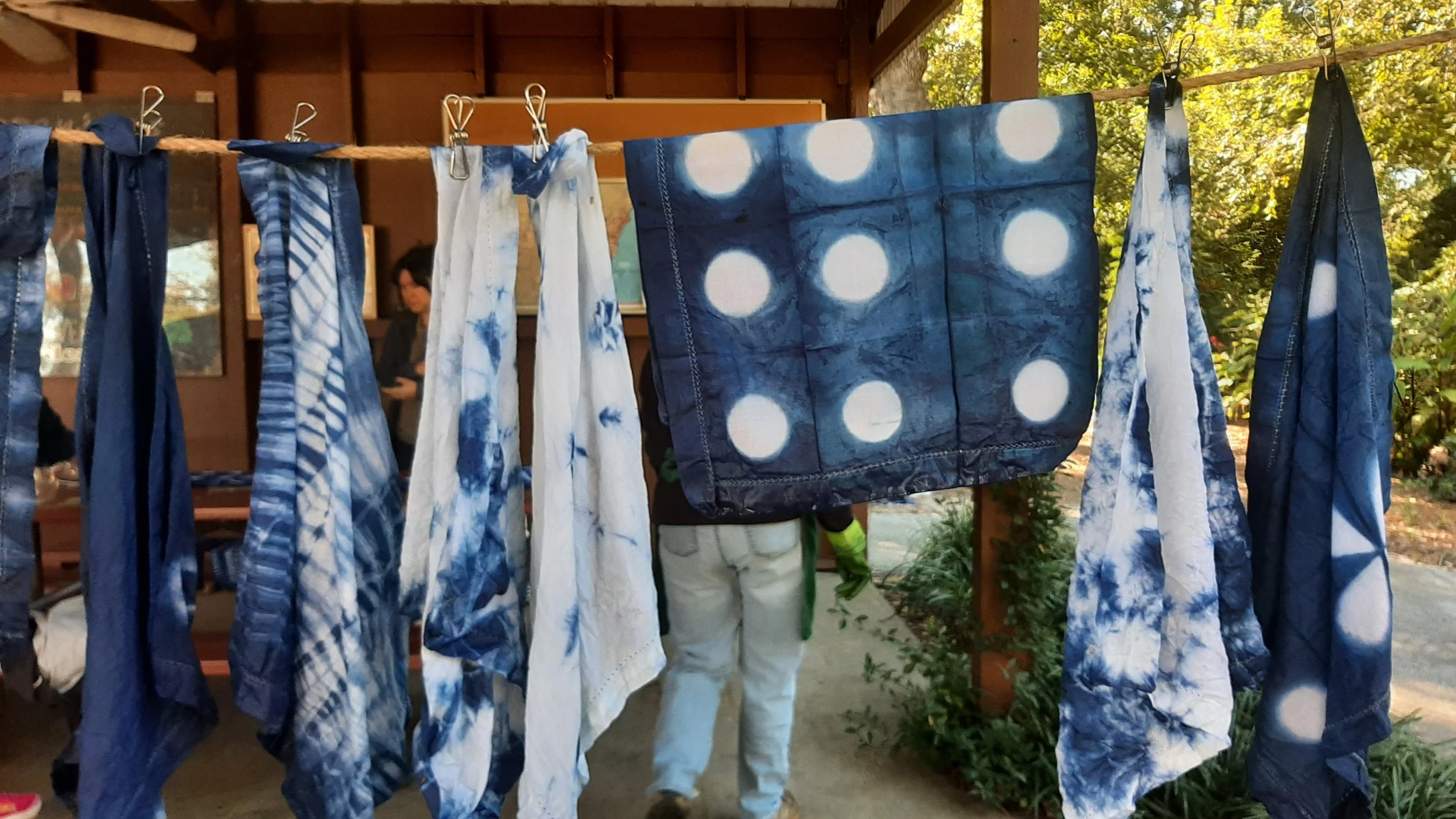
Hanging up the finished napkins to dry.