

Blooms of Note
To our visitors: please do not pick or dig up our flowers. They are here for everyone’s enjoyment.
We will gladly give you resources to acquire flowers for your own garden. Thank you.
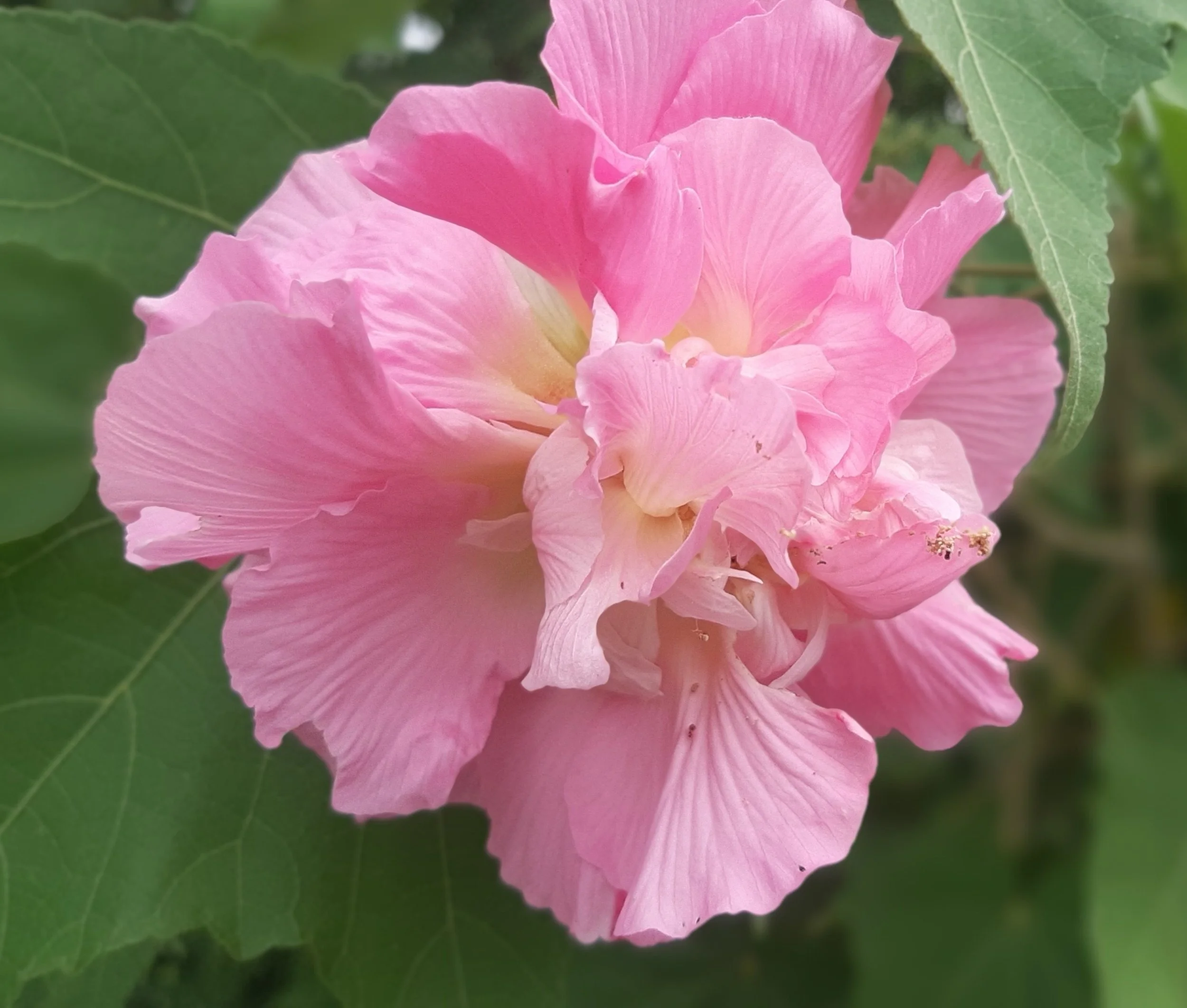
The Confederate Rose Hibiscus (Hibiscus mutabilis) is blooming on the edge of the main parking lot. Growing all year to a height over 10 feet, the plant explodes with its pinkish blooms now until first frost. The species name mutabilis is Latin for change, referring to the changing color of the flowers from pale pink when they first open to deepening to almost magenta by the time they close. Also called the mallow rose and cotton rose, the plant has its origins from southeast and central China.
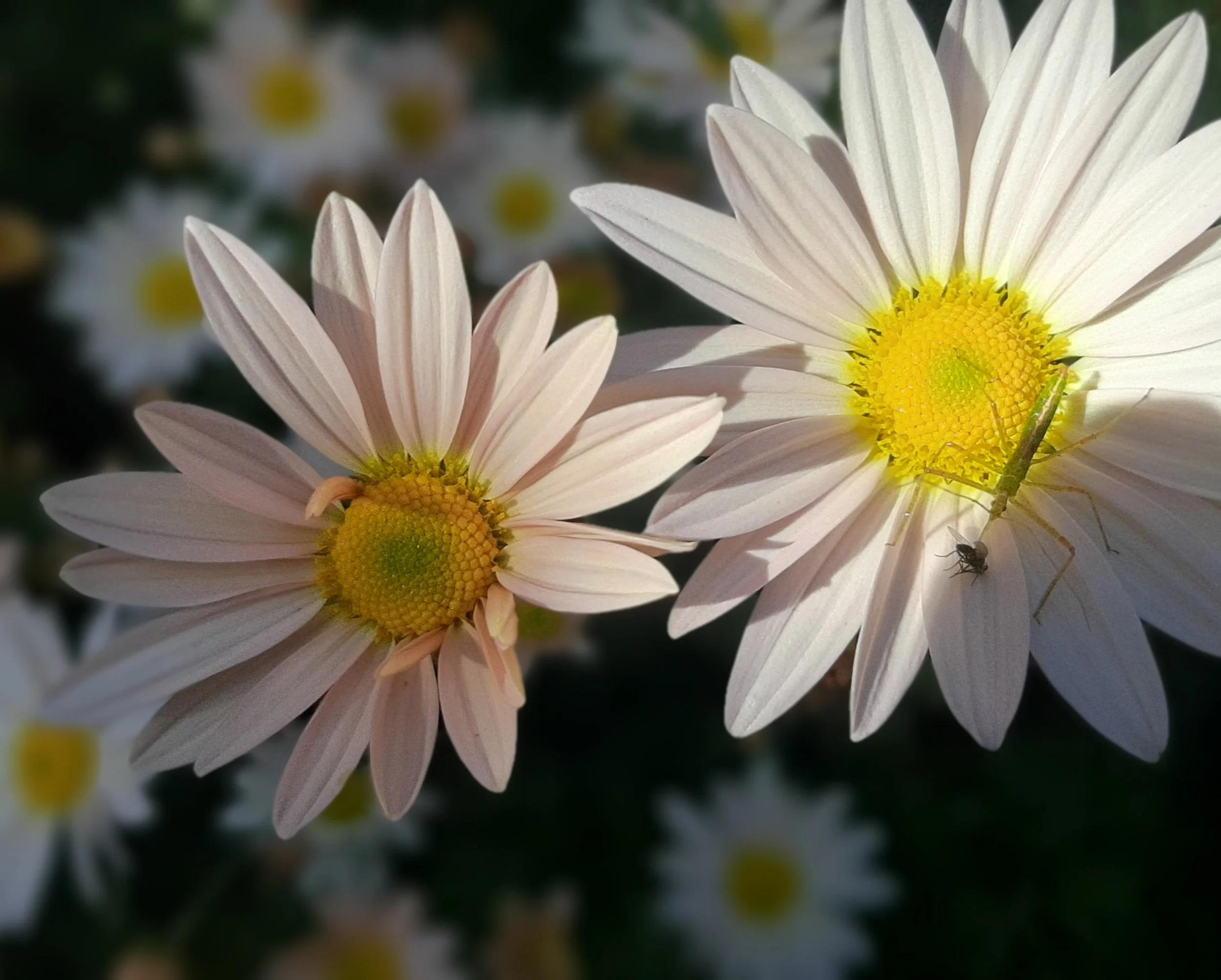
Michelle's Pink Chrysanthemum (Chrysanthemum ‘Michelle’s Pink’) is blooming in the Water Wise Demonstration Garden and at the entrance. The buds begin as a deep pink that fades to a soft pastel pink when fully open. Drought resistant, the plant expands to huge clumps of thin stemmed flowers. they will bloom until first frost.
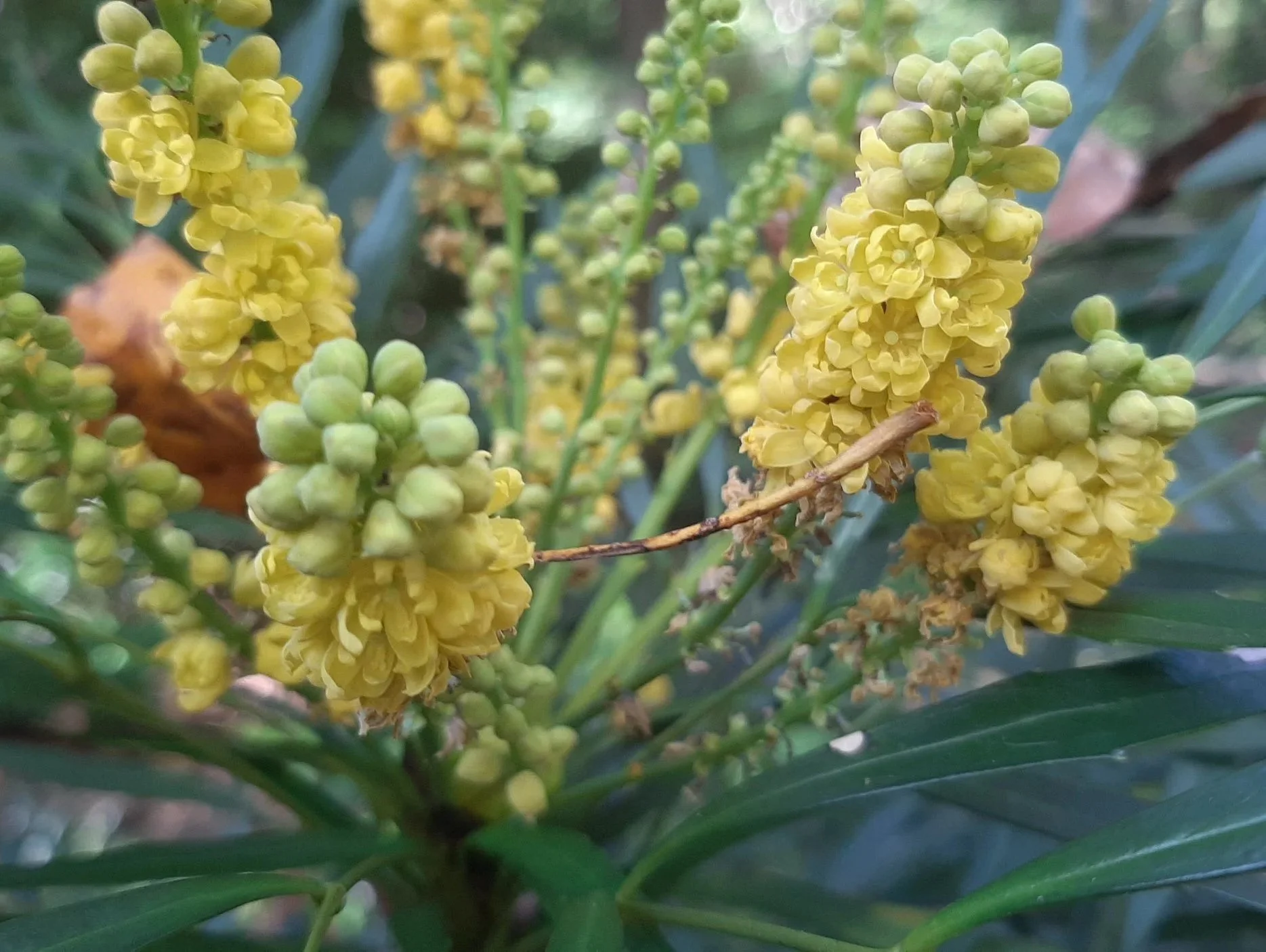
The Laceleaf Mahonia (Mahonia eurybracteata) has started blooming on the Mary Black Foundation Trail near the Overlook Terrace. A native of China, this shrub’s soft leaves differ from the Leatherleaf Mahonia (Mahonia bealei), which will bloom later in December with its sharp prickly leather-like leaves. The bright yellow clusters of flowers attract pollinators when other plants have gone dormant.
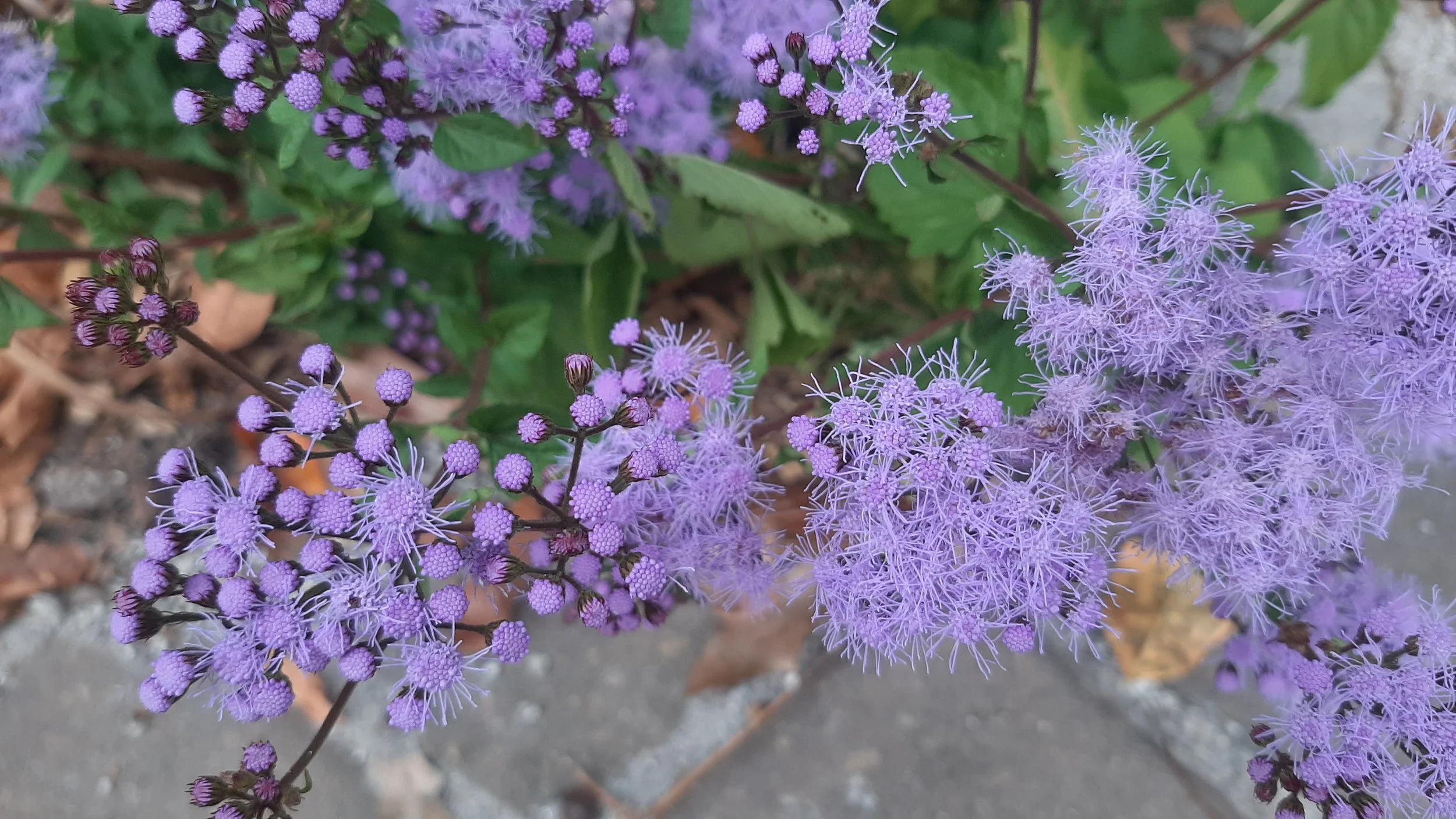
The Blue Mist Flower (Conoclinium coelestinum) is also at the entrance of the garden, greeting visitors with its fluffy violet colored flowers. Also called the Bluemink, Hardy Ageratum (because it looks like its annual cousin) and Floss Flower, it is a member of the aster family and a perennial.
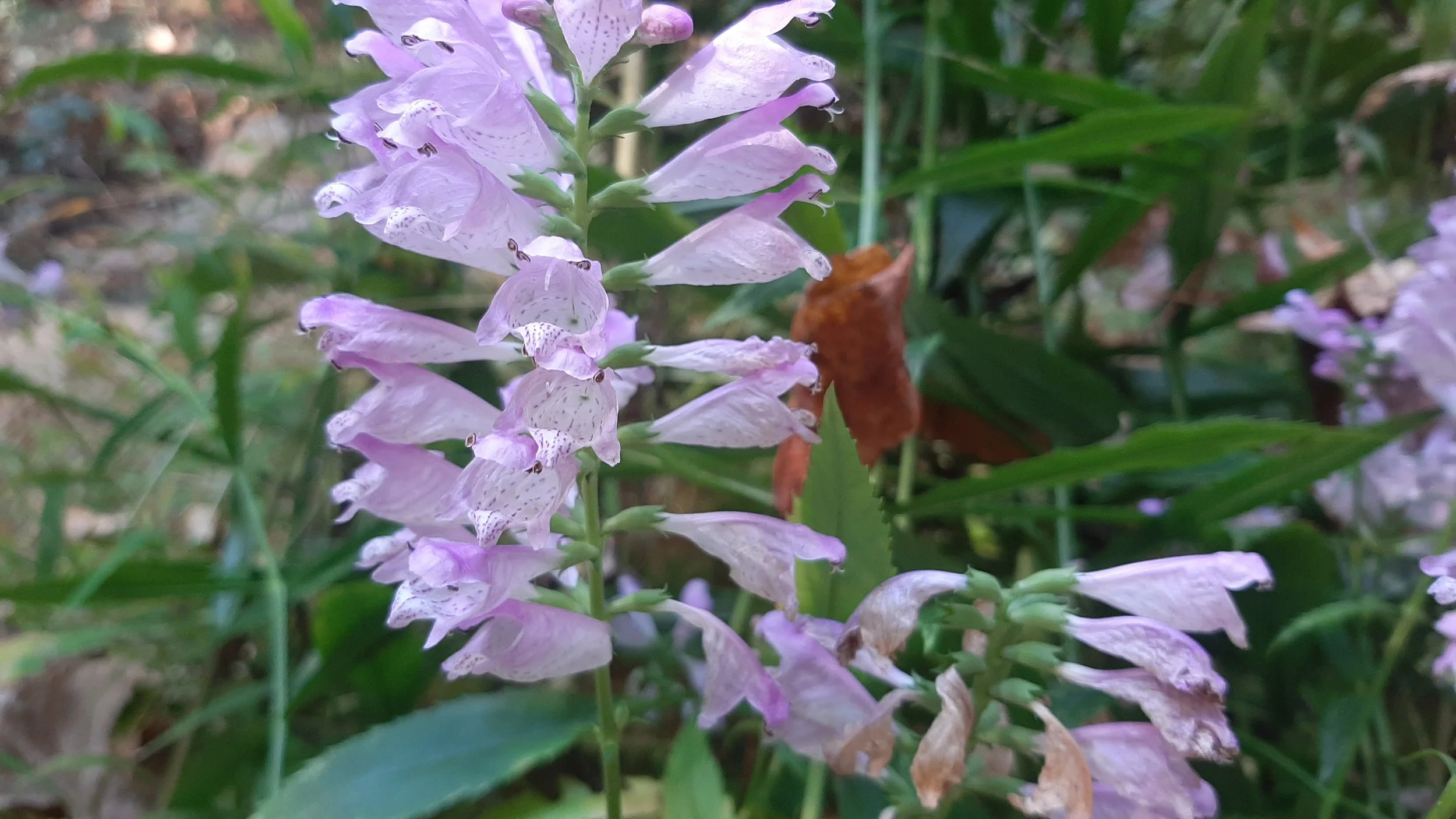
The Obedient Plant (Physostegia virginiana) is currently blooming the the Josephine Hatcher Woodland Garden. Normally all the flowering occurs in this garden during the spring, but in the fall this native starts blooming. It is called “obedient” because you can bend the flowers in a different direction and and they will remain that way for a short period of time. If given full sun, the plant will grow over three feet tall (look for the plants growing near the Lower Pond).
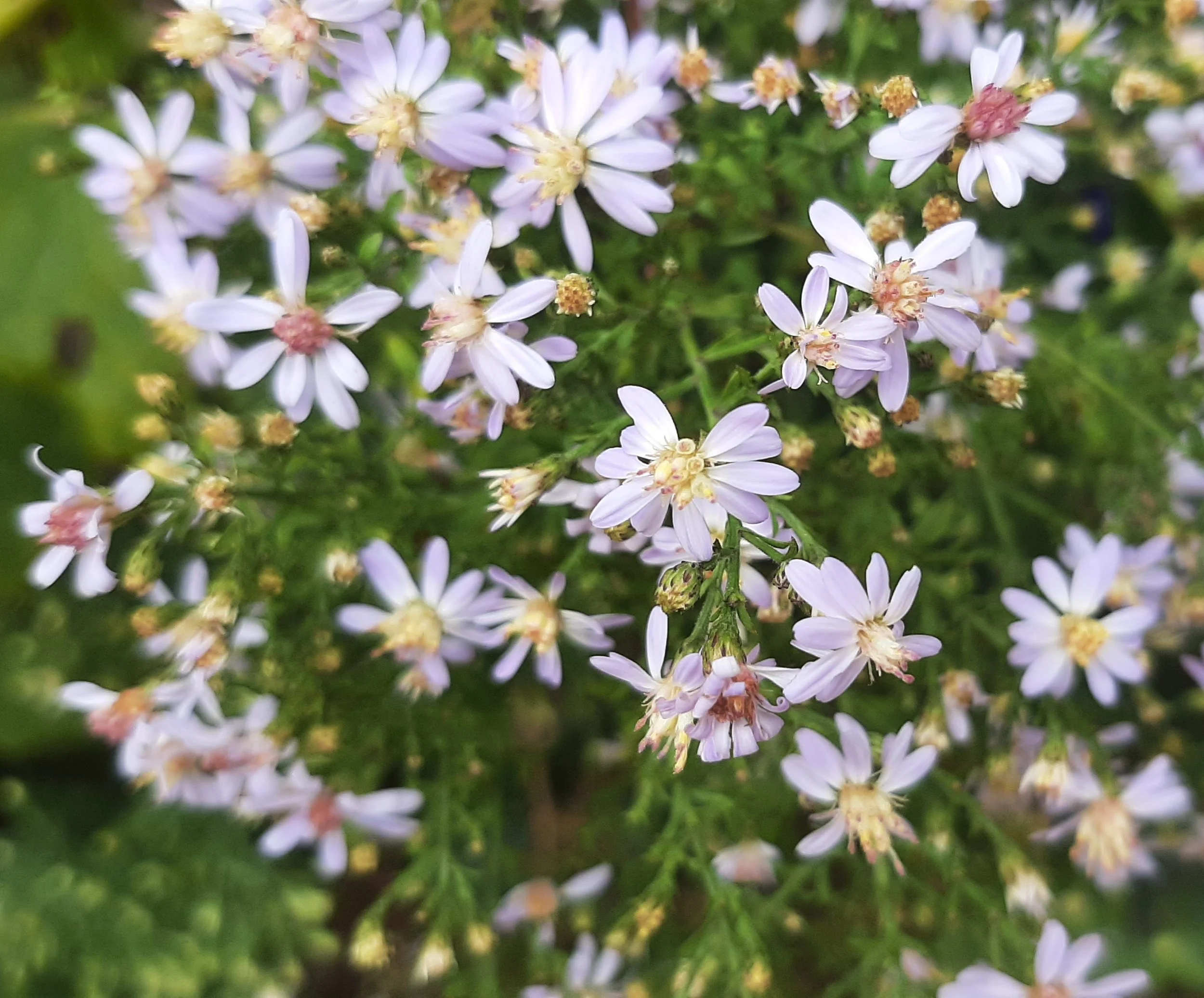
The Blue Wood Aster (Symphyotrichum cordifolium) is blooming in the Water Wise Demonstration Garden. The dainty light blue and pastel purple daisy like flowers with yellow centers grow on woody stems. A native to eastern and central North America, the specific epithet refers to the heart-shaped leaves (cordi - heart and folium - leaf).
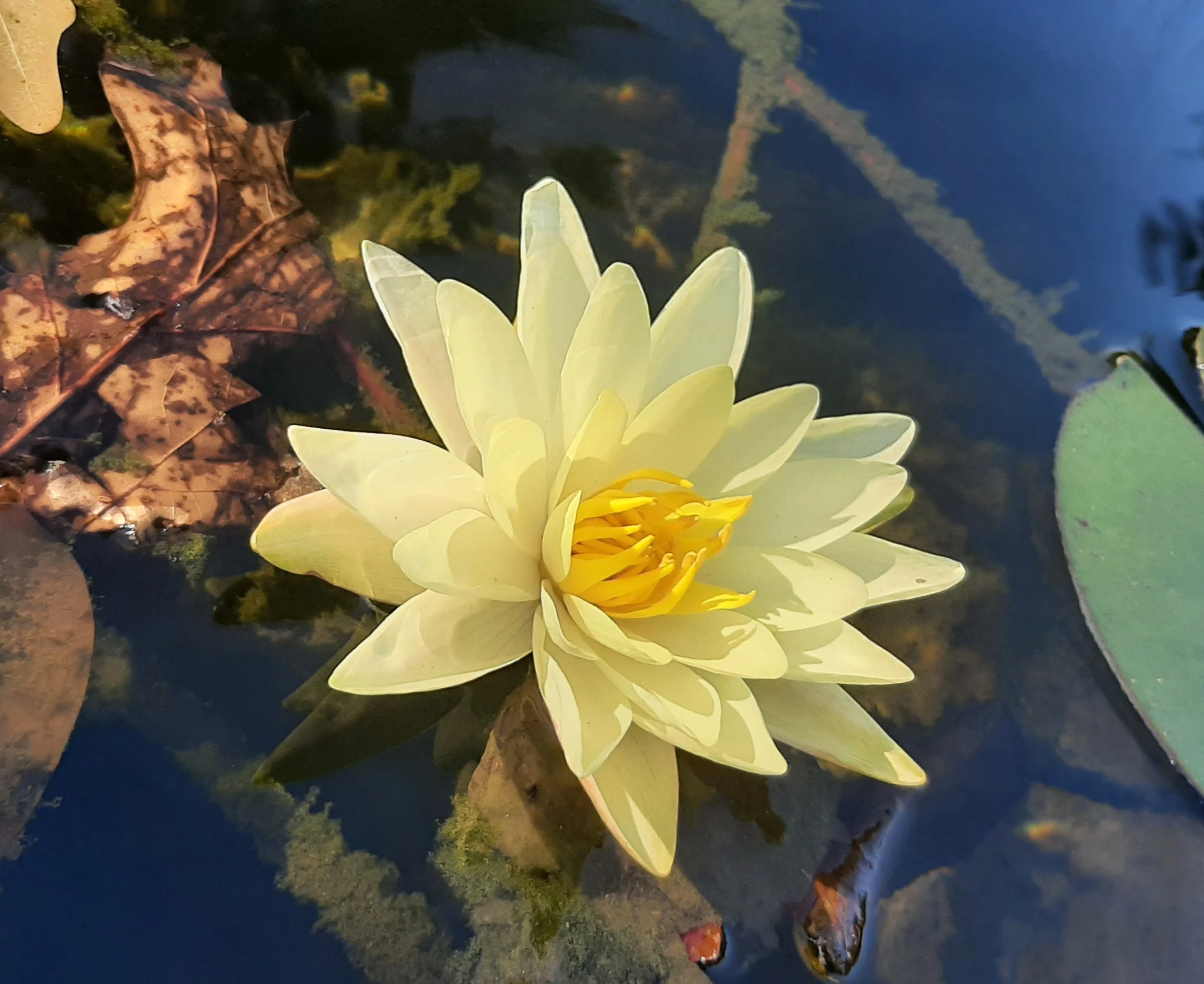
The White Water Lily (Nymphaea odorata) is blooming in the Children’s Garden below the Children’s Garden Gazebo. Water lilies were planted by Harold Hatcher in what is now the Upper Pond and it is good to see them back again. The scientific name means: Nymphaea alludes to the beautiful water nymphs of Greek Mythology and odorata reflects the fragrant smell they generate. Water lilies are nyctinastic (sleep movement); they are open during the day but close at night to protect the pollen.
Splendor in Every Season
There’s always something in bloom at Hatcher Garden. While blooms cannot be predicted with complete accuracy, the following list offers a sample of what you may see throughout the year.
Note: ‘Single quotes’ indicate cultivar names and “double quotes” indicate common names.

Spring
Ajuga reptans ‘Burgundy Glow’
Ajuga reptans ‘Chocolate Chip’
Amsonia hubrichtii (bloom) “Threadleaf Bluestar”
Azalea, many colors
Azalea, native
Baptisia sphaerocarpa ‘Screaming Yellow’
Cercis canadensis ‘Alba’ “White Redbud”
Cercis canadensis ‘Ruby Falls’ “Weeping Redbud”
Cercis canadensis ‘Traveller’
Clematis armandii “Evergreen Clematis”
Daffodils, assorted cultivars
Dianthus ‘Bath’s Pink’
Erythronium americanum
Fothergilla (bloom)
Galanthus nivalis
Geranium ‘Rozanne’ “Woodland Geranium”
Hyacinth, assorted cultivars
Iris sibirica 'Caesar's Brother'
Kerria japonica
Leucojum aestivum “Summer Snowflake”
Lunaria annua (bloom) “Money Plant”
Magnolia soulangeana “Tulip Magnolia”
Mertensia viriginica - “Virginia Bluebells”
Ornithogalum umbellatum “Star of Bethlehem”
Philadelphus coronarius “Mock Orange”
Phlox divaricata ‘Woodland Phlox’
Rhododendron hybrida
Spirea vanhouttei “Bridal Wreath Spirea”
Trillium cernuum
Trillium grandiflorium
Trillium recurvatum

SUMMER
Achillea millefolium Yarrow
Aesculus parviflora “Bottlebrush Buckeye”
Agastache ‘Blue Fortune’
Asclepias tuberosa “Butterfly weed”
Buddleja davidii “Butterfly Bush”
Caryopteris divaricata ‘Snow Fairy’ “Bluebeard”
Cephalanthus occidentalis ‘Sputnik’ “Buttonbush”
Clerodendrum trichotomum (flower) “Peanut Butter tree”
Coreopsis verticillata ‘Zagreb’ “Threadleaf Coreopsis”
Delosperma cooperi “Ice Plant”
Digitalis purpurea “Foxglove”
Echinacea ‘Magnus’ “Purple Coneflower”
Gardenia, many cultivars
Hemerocallis “Daylily” assorted cultivars
Hibiscus hybrid ‘Moy Grande’
Hosta, many cultivars
Hydrangeas (Oakleaf, Mophead and Lacecap) – many cultivars
Illicium floridanum “Florida Anise”
Indigofera ‘Little Pinkie’
Koelreuteria paniculata “Golden Rain Tree”
Lantana ‘New Gold’ and others
Liriope ‘Royal Purple’ and others “Monkey Grass”
Musa basjoo “Banana Tree”
Penstemon ‘Husker’s Red’
Physostegia virginiana ‘Miss Manners’ “Obedient Plant”
Salvia ‘Black and Blue’
Salvia ‘Hot Lips’
Salvia ‘Lipstick’
Trachelospermum jasminoides “Confederate Jasmine”
Tradescantia “Purple Heart”

AUTUMN
Acer palmatum “Japanese Maple” many cultivars
Acer saccharum “Sugar Maple”
Amsonia hubrichtii (foliage) “Threadleaf Bluestar”
Callicarpa americana “Beautyberry”
Camellia sasanqua
Chasmanthium latifolium “Northern Sea Oats”
Chelone lyonii ‘Hot Lips’ “Turtlehead”
Chrysanthemum ‘Country Girl,’ ‘Michelle’s Pink,’ and others
Clerodendrum trichotomum (seed) “Peanut Butter tree”
Conoclinium coelestinum “Blue Mist Flower”
Cotoneaster salicifolius “Willow-leaf Cotoneaster”
Crinum “Crinum Lily”
Crocosmia ‘Lucifer’ “Montbretia”
Cyclamen hederifolium “Hardy Cyclamen”
Euonymus americanus “Strawberry Bush” or “Hearts-a-Bustin”
Eupatorium dubium ‘Little Joe’ Joe Pye Weed
Fothergilla (foliage)
Gingko biloba “Maidenhair Tree”
Hedychium coronarium “Ginger Lily
Hibiscus mutabilis “Confederate Rose”
Hibiscus syriacus “Rose of Sharon” or “Althea”
Impatiens capensis “Jewelweed”
Leucanthemum ‘Becky’ “Shasta Daisy”
Liquidambar ‘Slender Silhouette’ “Narrow Sweetgum”
Lobelia cardinalis “Cardinal Flower”
Lunaria annua (seed) “Money Plant”
Lycoris radiata “Surprise Lily”
Mahonia eurybracteata
Muhlenbergia capillaris “Pink Muhly Grass”
Osmanthus fragrans ‘Fudingzhu’ “Tea Olive”
Parrotia persica ‘Select’ “Persian Ironwood”
Polianthes “Tuberosa”
Rudbeckia “Black Eyed Susan”
Rudbeckia maxima “Giant Coneflower”
Salvia leucantha “Mexican Sage”
Solidago ‘Fireworks’ “Goldenrod”

WINTER
Lonicera fragrantissima “Winter Honeysuckle”
Magnolia stellata “Star Magnolia”
Mahonia bealei ‘Winter Sun’ “Leatherleaf Mahonia”
Mahonia eurybracteata ‘Soft Caress’
Nandina domestica
Pachysandra “Japanese Spurge”
Prunus mume ‘Peggy Clarke’ “Flowering Apricot”
Acer palmatum 'Sango-kaku' “Coral Bark Maple”
Camellia japonica “Harold Hatcher favorites”
Edgeworthia chrysantha “Paper Bush”
Eranthis hyemalis “Winter Aconite”
Hamamelis “Witch Hazel”
Iris reticulata
Jasminum nudiflorum “Winter Jasmine”
Lilium formosanum “Formosa Lily

year-round
Acorus gramineus ‘Ogon’ “Sweet Flag”
Cyrtomium falcatum 'Rochfordianum' “Holly Fern”
Cephalataxus harringtonia ‘Dukes Garden’ “Spreading Yew”
Conifers (Gazebo Conifer Garden and ACS Selection Garden)
Distylium ‘Vintage Jade’ “Blue Leaf Isu”
Heuchera ‘Caramel’ and ‘Key Lime Rickey’
Ophiopogon “Mondo Grass”
Panicum ‘Heavy Metal’ Switch grass
Poncirus trifoliata ‘Flying Dragon’ “Hardy Orange”